

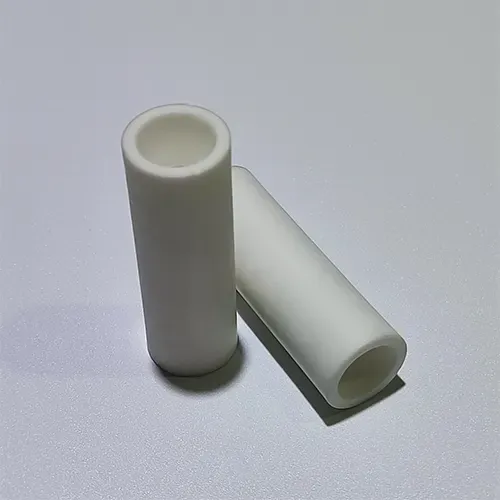
99.9% alumina ceramic uses an ultra-pure Al2O3 matrix (purity >99.9%) and sintering at ≥1800℃ to form an atomically dense structure. Hardness approaches single-crystal corundum (Mohs 9.2), temperature resistance exceeds 1900℃ in inert environments, and zero porosity resists molten-metal and plasma penetration. Dielectric loss is on the order of 10ˉ5, and surfaces can reach Ra<10nm for extreme precision applications. Biocompatibility and zero magnetic hysteresis also suit deep-space probe components and insulation in superconducting equipment, representing the upper performance range of industrial ceramics.
常见问题
Why choose precision ceramics over conventional materials?
Precision ceramics offer excellent resistance to heat, corrosion and wear, together with electrical insulation, making them suitable for extreme conditions such as high temperatures and pressures. They also support high-precision machining for complex designs.
Which industries use precision ceramics?
Precision ceramics are widely used in aerospace, automotive, electronics, medical and industrial equipment, particularly where high performance and durability are required.
Are precision ceramics difficult to machine?
High hardness and brittleness make precision ceramics difficult to machine. Specialized equipment and processes, such as CNC machining, are needed to ensure precision and surface quality.
How do I choose the right ceramic material?
Consider the specific operating environment and performance requirements, including heat resistance, corrosion resistance and mechanical strength. Different applications require ceramics with different properties.
How long do precision ceramics last?
Precision ceramics generally offer a long service life, from several years to longer, depending on operating conditions such as temperature, pressure and wear.